
Ice-bath the eggs for five minutes, crack the shell all over, then peel from the wide end under cool running water. If shells still fight you, the eggs are probably very fresh — week-old eggs peel dramatically better.
Why shells stick, in one paragraph
A fresh egg white is slightly acidic and bonds to the membrane inside the shell. As an egg ages in the fridge, it loses a little CO₂ through the shell, the white’s pH rises, and that bond weakens — which is why the “old eggs peel better” advice is real chemistry, not folklore. The ice bath helps for a different reason: the rapid cooling makes the egg contract slightly inside its shell, physically breaking the bond.
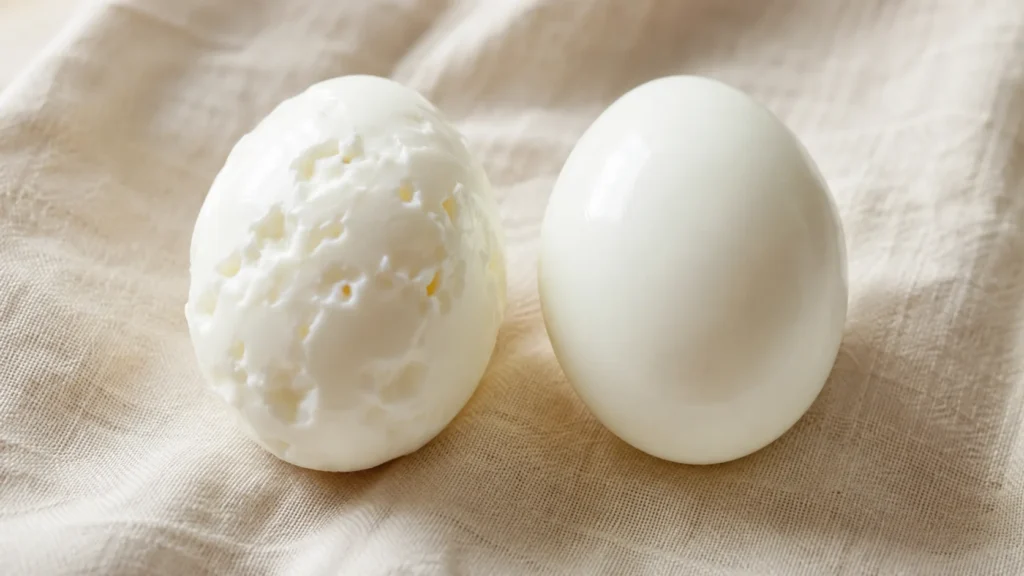
The method
1. Ice bath first — this is most of it
Five minutes in genuinely icy water for hard boiled eggs, one minute for soft. Cold tap water is half measures; you want the contraction, and that takes real cold.
2. Crack it everywhere
Tap the egg all over on the counter, or roll it gently under your palm, until the shell is a mosaic. Lots of small cracks release the shell in big connected sheets; one big crack makes you excavate the rest in fragments.
3. Start at the wide end
The air pocket lives at the wide end, which gives your thumb a gap to get under the membrane. Get under the membrane, not just the shell — once you’re under it, the shell comes away in strips.
4. Peel under running water
Cool water gets between shell and white and floats fragments away. It also washes off the grit, which nobody enjoys finding at the table.
When shells still won’t cooperate
Very fresh eggs. Farmers-market eggs from this week are the worst-case peel. Either save them for scrambling and boil your older ones, or steam instead of boiling — steam attacks that membrane bond harder than water does.
Try steaming. Same times as boiling plus about 30 seconds, and consistently easier peeling. The steamed egg guide has the full method with its own timer. For fresh eggs specifically, an Instant Pot is the only method that reliably beats them.
The spoon trick. For soft boiled eggs, skip peeling entirely: crack off the top and eat it from the shell. For a peeled soft egg, crack the wide end, slide a teaspoon between membrane and white, and rotate — the spoon’s curve matches the egg’s.
Baking soda: minor at best. Half a teaspoon in the water nudges pH the helpful direction, but the effect is small next to egg age and the ice bath. Fix those two first.
Easy peeling starts before the water boils
Boiling-water start, exact time, and an ice-bath countdown the timer runs for you — the three things that decide how the shell comes off.
Peeling questions
Why do my hard boiled eggs peel with craters?
The membrane bonded to the white — fresh eggs, insufficient cooling, or both. Ice-bath for a full five minutes, and if you can, boil eggs that have been in your fridge a week or more.
Is it easier to peel eggs warm or cold?
Cold, decisively. A warm egg is soft, its membrane is stickier, and soft boiled ones will collapse in your hand. The one exception: peeling immediately after a proper ice bath, while the contraction is fresh, is the single best window.
Do Instant Pot eggs really peel easier?
Yes — pressure-cooked steam gets under the membrane aggressively, and even fresh eggs usually come out clean. If you own one and peeling is your recurring misery, the Instant Pot method is your answer.
Can I peel boiled eggs ahead of time?
Yes. Peeled eggs keep up to a week refrigerated per USDA guidance, same as unpeeled — they just dry out, so keep them in a sealed container. For best texture, peel the day you eat.