Lower cold eggs into already-boiling water and cook 6 minutes for soft, 6:45 for jammy, 8 for medium, or 11 for hard (large eggs). Move them straight into ice water. That’s the whole method — the details below are why it works.
6 minutes, large egg, straight from the fridge, into boiling water. Runny yolk, set whites.
Runny yolk, set whites
Ready when you are
6:00
The countdown needs JavaScript. The times below are correct without it.
Start it the moment the eggs go into the boiling water.
Method, altitude, and other eggs
Only matters above about 3,000 ft. If your city isn’t listed, you’re fine on the standard times. Learn more
| Doneness | Medium | Large | Extra large | What you get |
|---|---|---|---|---|
| Very soft | Fully liquid yolk, whites just set | |||
| Soft | Runny yolk, set whites | |||
| Jammy | Custardy centre, the ramen-egg standard | |||
| Medium | Set edge, soft fudgy centre | |||
| Hard | Fully set, no grey ring |
The method, step by step
Boiling an egg is a timing problem wearing a cooking costume. There’s no seasoning, no technique, no feel — just heat and minutes. Get the minutes right and the egg is right. Here’s the version that’s repeatable.
Want the full detail on one doneness? There’s a deep guide for soft boiled eggs and another for hard boiled eggs. Cooking with something other than a pot? Start at the methods hub.
1. Start with the water, not the eggs
Bring enough water to a full rolling boil to cover the eggs by about an inch. A rolling boil means big, constant bubbles — a simmer looks close enough and isn’t, and it will run every time on this page long. Starting with boiling water is what makes the timing repeatable: cooking begins at a moment you can see.
2. Lower the eggs in gently
One at a time, on a spoon. Dropped eggs crack, and a cracked egg leaks white into the water and cooks unevenly. Use eggs straight from the fridge — every time on this site assumes a fridge-cold large egg, so a room-temperature egg needs about a minute less.
3. Start the timer the moment the last egg is in
For a large egg: 5 minutes for very soft with a liquid yolk, 6 for soft with a runny yolk, 6:45 for jammy, 8 for medium, 11 for hard. Egg size moves each of those by about 30 seconds per step — the timer above adjusts this for you. Keep the water at a steady boil, lid off.
4. Ice bath, immediately
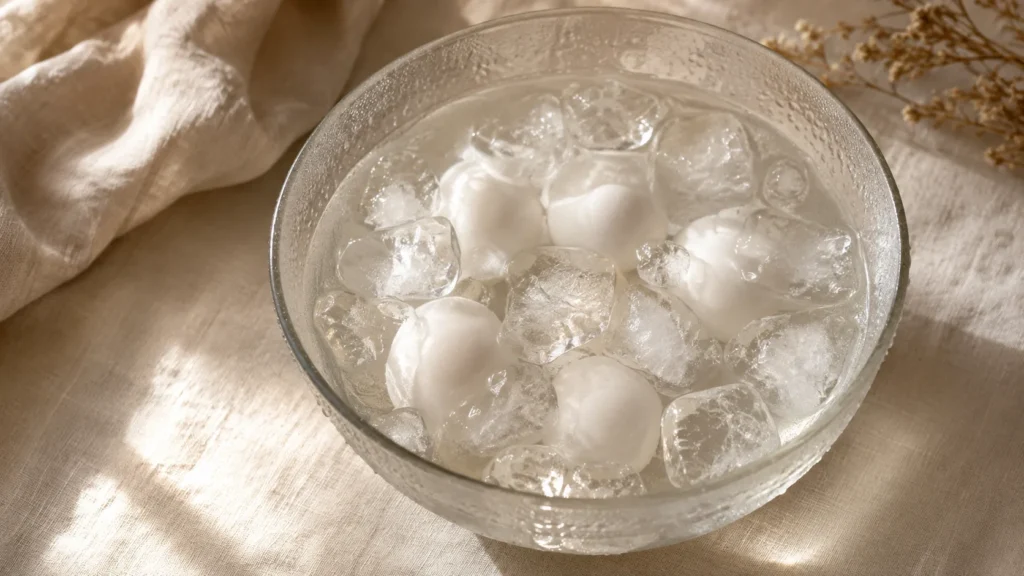
Have a bowl of ice water ready before the timer goes. A hot egg keeps cooking after it leaves the pot — without the ice bath, your 6:45 jammy egg is a medium egg by the time you’ve peeled it. One minute in the ice is enough for soft eggs, five for hard. This is also most of what makes shells peel cleanly.
5. Peel from the wide end
Crack the shell all over, then peel from the wide end — that’s where the air pocket sits — under cool running water. Shells fighting you anyway? That’s usually very fresh eggs; there’s a whole guide on peeling.
The three things that change the time
Egg size
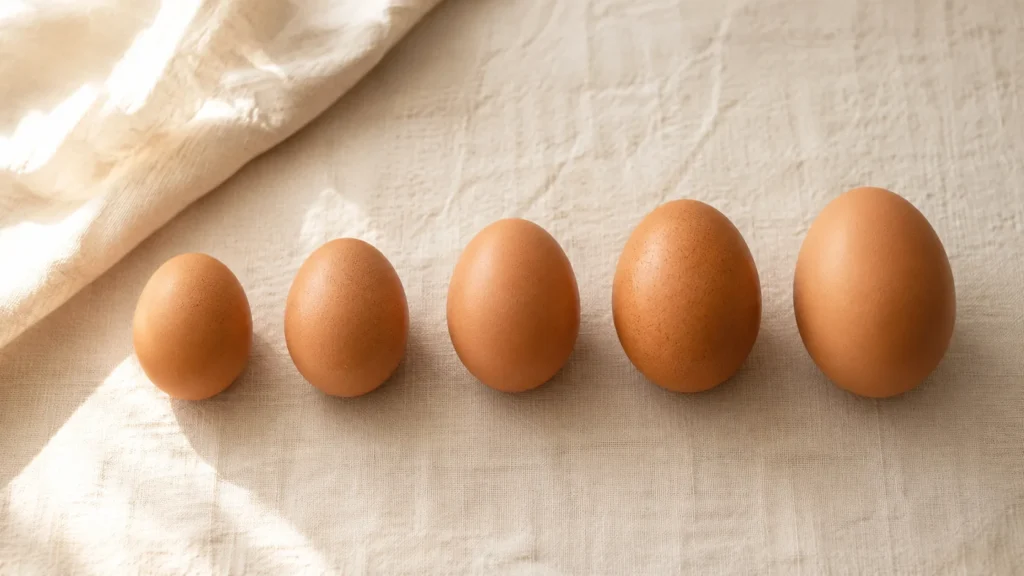
About 30 seconds per size step. Small runs a full minute under large; jumbo runs a full minute over. At the soft end of the chart, 30 seconds is the visible difference between runny and set, so this isn’t pedantry. Not sure what you have? Large is the safe assumption in the US and the UK.
Cold-water start
Some people prefer putting eggs into cold water and bringing the whole pot up together — it’s gentler on shells. It works, with one rule: start your timer when the water reaches a full rolling boil, and cook for less time from that point, not more. The egg has already been cooking on the way up. The timer’s cold-water setting handles the math. The cold start vs boiling start guide covers when each wins.
Altitude
Above about 3,000 feet, water boils below 212°F — around 202°F in Denver — so eggs cook slower even though the water is visibly boiling. Add a minute between 3,000 and 5,000 feet, two up to 7,000, three beyond. Or pick your city in the timer and let it do this for you. The altitude guide has the full explanation.
How many eggs? Doesn’t matter.
The most common question, and the answer surprises people: a dozen eggs cook in the same time as one. More eggs cool the water down, so it takes longer to come back to a boil — but once it’s boiling again, the cook time is identical. Use a pot big enough that the water recovers quickly, wait for the boil to return, then start the timer.
Boiling eggs — common questions
Do I boil eggs for 10 or 12 minutes for hard boiled?
Eleven, for a large egg into boiling water, then straight into ice. Ten leaves a slightly soft centre; twelve and beyond risks the grey-green ring and a chalky yolk. If you see times like 10 or 12 elsewhere, they’re usually assuming a different start method or no ice bath.
Why did my eggs crack in the pot?
Temperature shock or a rough landing — almost never a bad egg. Lower them on a spoon instead of dropping, and don’t let the boil be so violent it knocks eggs against each other. If cracking keeps happening, the cold-water start is gentler on shells. More in the cracking guide.
Lid on or lid off?
Off, once the eggs are in. A lid pushes the water back to a harder boil and can bounce the eggs around, and it hides what the water is doing. The times on this page assume lid off at a steady boil.
Can I skip the ice bath?
For hard boiled eggs you’re peeling later, cold tap water for a few minutes will do at a pinch. For anything soft or jammy, no — the carryover cooking through a 45-second doneness window is exactly what the ice bath exists to stop.
How long do boiled eggs keep?
Up to one week refrigerated, in the shell or peeled, per USDA guidance. Into the fridge within two hours of cooking. The storage guide covers freezing (don’t) and reheating.