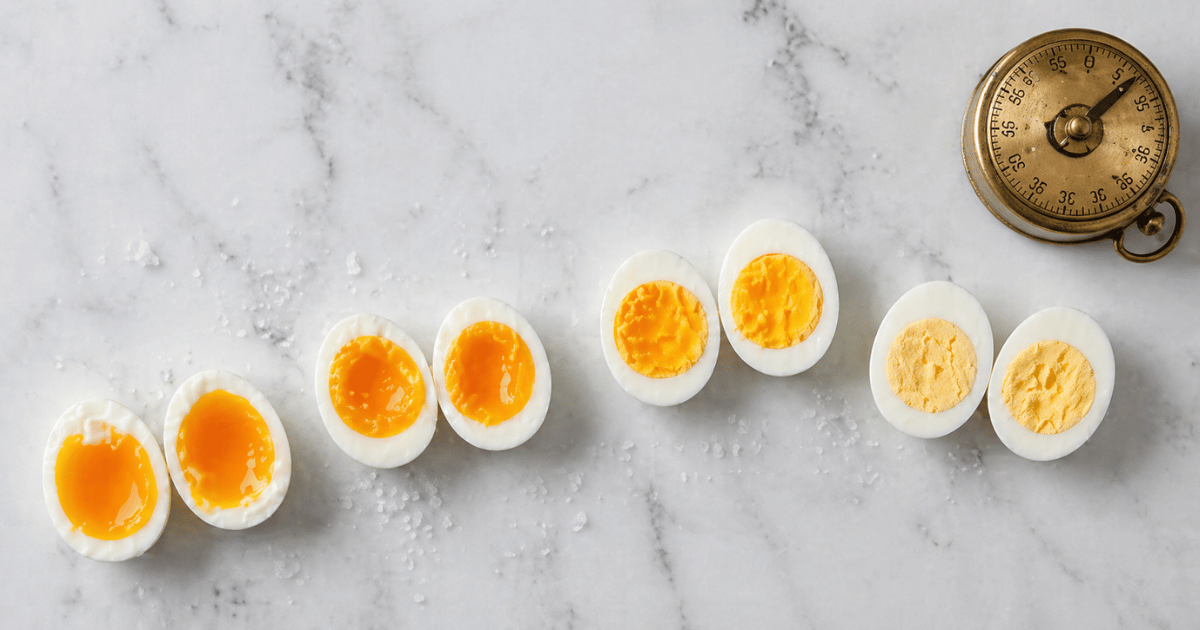
Perfect Boiled Egg Timer — Get Perfectly Boiled Eggs Every Time
A free perfect boiled egg timer calibrated for precise, repeatable results. Whether your “perfect” is a runny 4-minute soft boiled, a 7-minute jammy ramen yolk, or a 10-minute classic hard boiled, the presets below match chef-recommended times. Includes a perfect boiled egg time chart, cold-water-start mode, audio alarm, and the science behind why timing matters down to the second.
Perfect Boiled Egg Time Chart
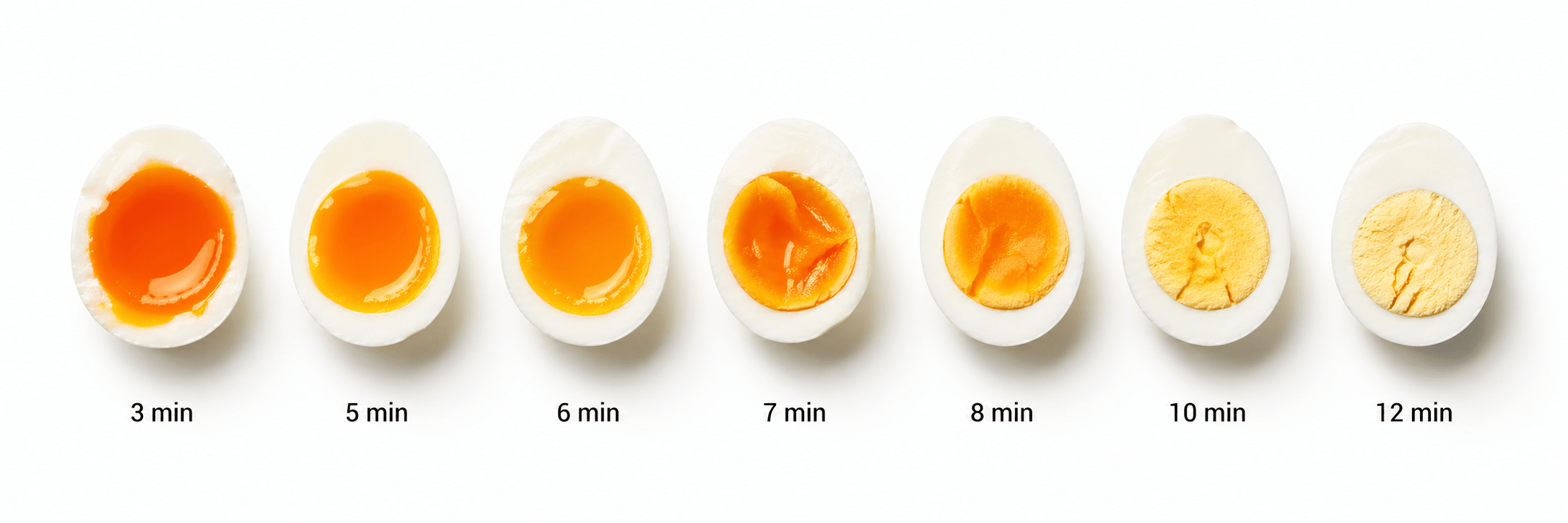
Getting perfectly boiled eggs every time isn’t about luck — it’s about controlling four variables: starting water temperature, egg size, cooking time, and post-cook ice bath. Use the chart below to dial in your preferred yolk consistency, then trust the timer to handle the rest.
| Doneness | From boiling water | From cold water | Why this is “perfect” |
|---|---|---|---|
| Perfect Very Soft | 3 min | 5 min | Liquid yolk, just-set white — for dipping toast |
| Perfect Soft Boiled ⭐ | 6 min | 8 min | Firm white, runny golden yolk — the classic |
| Perfect Jammy | 7 min | 9 min | Fudgy yolk that holds shape when sliced — ramen style |
| Perfect Hard Boiled | 10 min | 12 min | Tender yolk, fully cooked, no green ring |
| Perfect Well Done | 12 min | 14 min | Firm yolk for egg salad and deviled eggs |
Egg size adjustments: The times above assume large eggs. Add 30 seconds for extra-large, subtract 30 seconds for medium. Off by 30 seconds at the soft-boiled end of the chart is the difference between runny and just-set yolk — precision matters.
The Science Behind Perfectly Boiled Eggs
Egg whites and yolks set at different temperatures, which is why a few seconds change everything:
- Whites begin to set at 145°F (63°C) and are fully firm by 180°F (82°C).
- Yolks begin to thicken at 150°F (65°C), become jammy around 158°F (70°C), and fully set at 170°F (77°C).
- The narrow window between jammy and set — about 12°F — is why a 7-minute egg has a fudgy yolk and a 9-minute egg is firmer. The egg is climbing through that temperature range one second at a time.
This is also why an ice bath isn’t optional for perfection: residual heat keeps cooking the egg for 30–60 seconds after you remove it from boiling water. Without the ice bath, your “10-minute egg” is really an 11-minute egg.
5 Rules for Perfect Boiled Eggs Every Time
- Use a rolling boil, not a simmer. Bubbles should be vigorous, not gentle. A simmer cooks slower and unpredictably — you’ll never get repeatable results.
- Start with cold eggs from the fridge. Room-temperature eggs cook faster and inconsistently. The chart above assumes refrigerator-cold eggs.
- Lower eggs in gently with a slotted spoon. Dropping eggs cracks the shells. A spider strainer or skimmer is even better.
- Trust the timer down to the second. “About 7 minutes” doesn’t exist for perfect eggs. Set the timer, walk away, come back when it beeps.
- Ice bath immediately, every time. This isn’t a “nice-to-have” — it’s what stops the cooking and locks in your chosen doneness. Skip it and your timing was for nothing.
Why Your Boiled Eggs Aren’t Coming Out Perfect
- Yolks are different doneness on different days? Egg size is varying. Stick with one size carton for consistency.
- Whites stuck to shells when peeling? Your eggs are too fresh. Buy them 7+ days before you plan to hard boil.
- Cracked shells while cooking? Either dropping eggs in too hard, or starting from too cold (try room temp eggs only if you adjust timing). A pin-prick in the wide end before cooking helps too.
- Grey-green ring around the yolk? Overcooked. Reduce time by 1 minute and ice-bath longer.
- Inconsistent results between batches? Different stove, pot size, or altitude. The chart above is calibrated for sea-level cooking — at high altitude, add 1 minute per 1,000 ft above 3,000 ft.
Perfect Boiled Egg Timer FAQ
What is the perfect time for a boiled egg?
It depends on your preferred yolk consistency: 3 minutes for very runny, 6 minutes for classic soft boiled with runny yolk, 7 minutes for jammy ramen-style, 10 minutes for tender hard boiled, or 12 minutes for firm well-done. All times assume large eggs going into boiling water from the fridge.
How do you make perfectly boiled eggs every time?
Five rules: use a rolling boil (not a simmer), start with cold eggs straight from the fridge, lower them in gently with a slotted spoon, trust the timer down to the second, and ice-bath immediately when the timer beeps. Skipping any one of these makes results inconsistent.
Why does my boiled egg yolk come out different every time?
Three usual causes: varying egg size between batches, inconsistent water temperature (simmer vs rolling boil), or skipping the ice bath. Lock down all three and your results become repeatable. Also check whether your eggs are the same temperature — fridge-cold vs room-temp changes timing by ~30 seconds.
Does egg size really matter for perfect boiled eggs?
Yes — and more than people think. A medium egg cooks ~30 seconds faster than a large one, and an extra-large takes ~30 seconds longer. At the soft-boiled end of the chart, that’s the difference between runny and set. The cleanest fix is to use one size carton consistently rather than mixing sizes.
Should I use a boiling water start or cold water start for perfect eggs?
For maximum precision, boiling water start is better — cooking begins at a known moment, so timing is exact. Cold water start is gentler on shells (less cracking) and gives slightly more even cooking, but adds variability since “the moment water reaches a boil” isn’t always identical. Pick one method and stick with it for repeatability.
Why is the ice bath so important?
Residual heat keeps cooking the egg for 30–60 seconds after you remove it from the water. Without an ice bath, a “7-minute jammy egg” becomes an 8-minute medium egg by the time you peel it. The ice bath stops the cooking instantly, lets you actually hit the doneness you timed for, and makes peeling far easier on hard boiled eggs.
Can I cook perfect boiled eggs at high altitude?
Yes, but you need to compensate. Water boils at lower temperatures at altitude, so eggs cook slower. Add about 1 minute to all chart times for every 1,000 feet above 3,000 feet of elevation. So at 6,000 feet, a “perfect 6-minute soft boiled” becomes a 9-minute soft boiled.